01 / Context
Indonesia overview
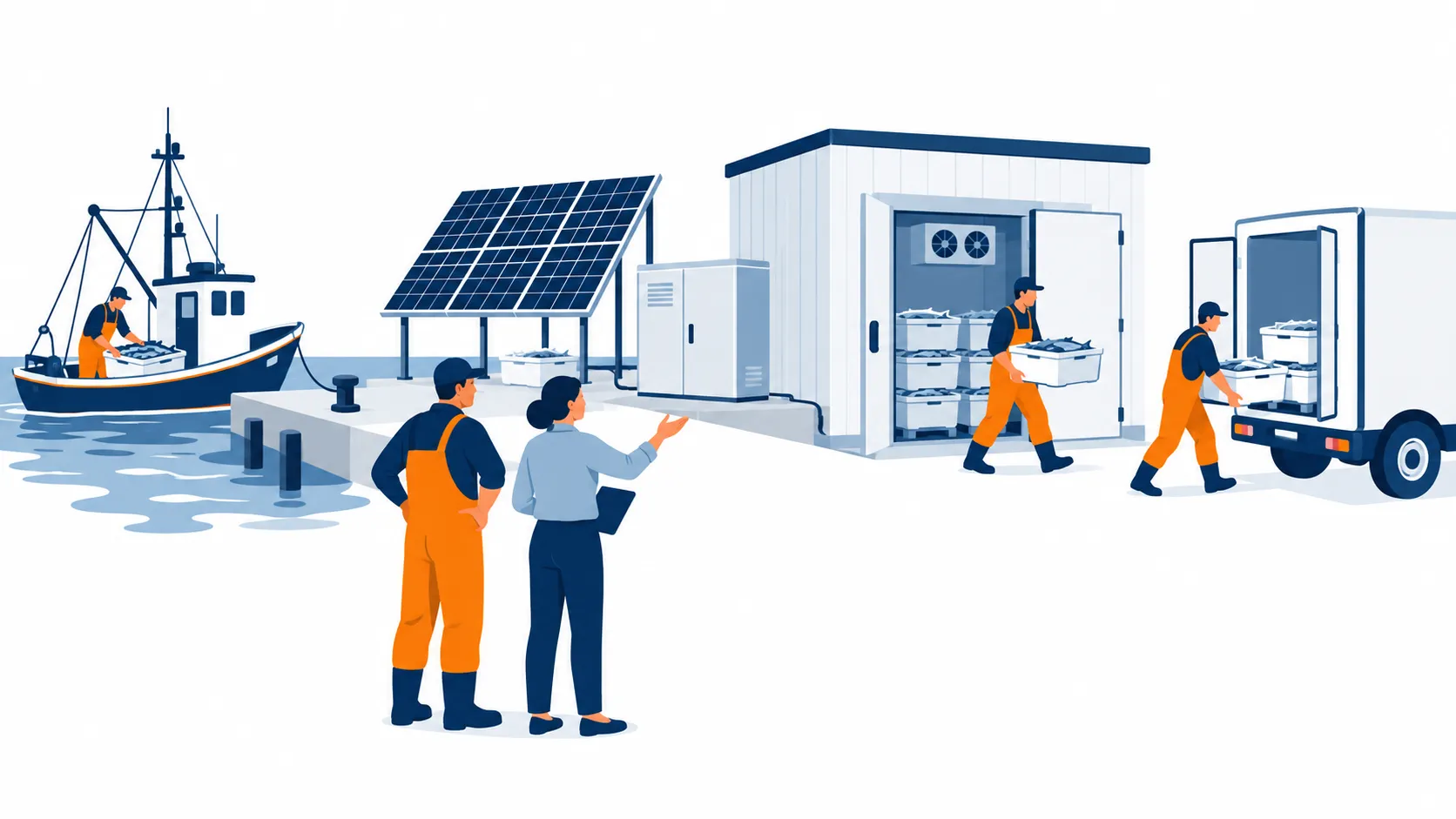
A cold room is only one part of a temperature-controlled chain. Product arrival, loading, transport, door opening and electricity availability all affect performance. The right combination of solar PV, batteries and phase-change thermal storage depends on the load profile and the temperature the product actually requires.
02 / Public initiatives
Government direction and progress
KKP’s June 2025 description of the Kampung Nelayan Merah Putih programme included ice plants and cold storage among planned coastal facilities. Planned infrastructure creates a reason to examine operating needs, but an announced facility is not evidence of utilisation or a procurement opportunity.
KKP · fishing-village infrastructure programme, June 2025 ↗03 / Adoption on the ground
What businesses and communities need
The business decision
Storage operators, seafood processors and logistics firms need evidence of occupancy, seasonal throughput, energy expenditure and downtime. Compare total ownership and service costs under actual operating hours, not only equipment prices or rated capacity.
The people using the solution
Fishers and small traders benefit only if storage is accessible, affordable and connected to buyers. Charges, opening hours and rules for allocating space can determine whether a technically sound system is used.
04 / Proteka’s assessment
Where solutions can make a difference
A measured comparison of conventional cooling, solar-plus-battery and thermal storage can identify a viable configuration. Pilot temperature stability, energy use and product quality together, then test the revenue model.
Questions a useful project should resolve
- How much product arrives each day and in each season?
- What temperature and backup duration are required?
- Who pays for maintenance and replacement components?
These are opportunities to investigate, not confirmed market demand. A field study should test the customer, operating conditions and commercial assumptions.
05 / Working together
How Proteka can contribute
Direct, hands-on experience
We draw on system sizing and cost comparisons from real installations, including solar, battery and phase-change storage. We support demand studies, operating-model comparisons and coordination with equipment specialists.
06 / Keep exploring